
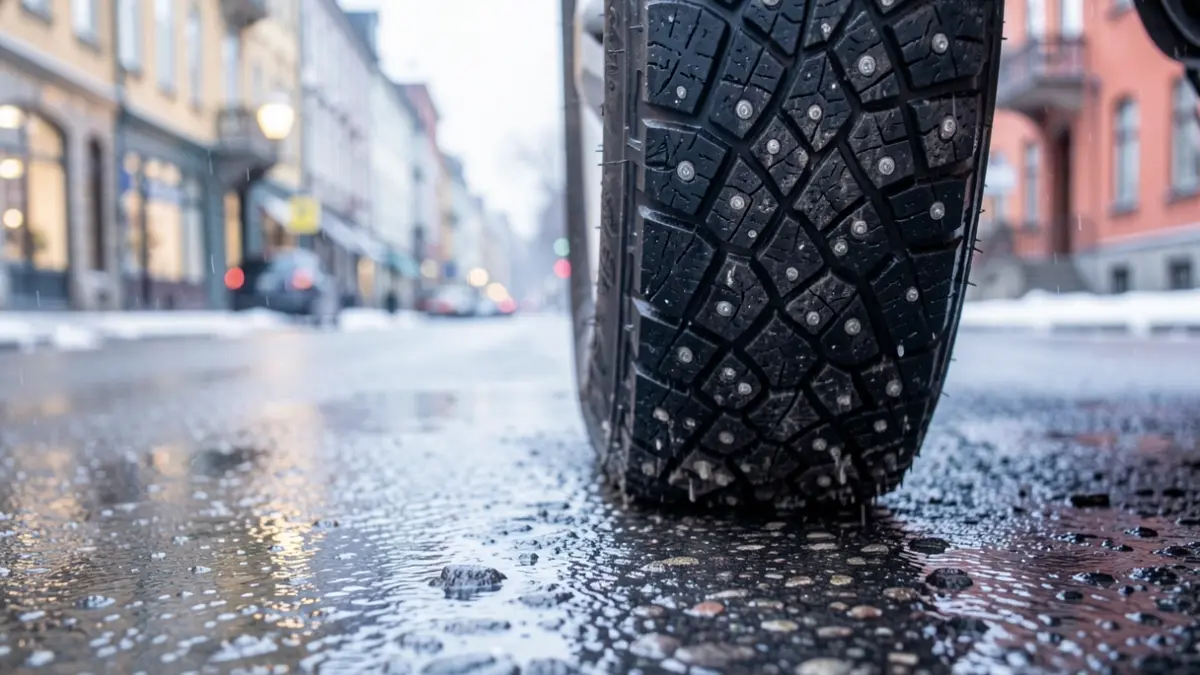
Romain Rumpler at KTH's Marcus Wallenberg Laboratory for Sound and Vibration Research has measured traffic in Stockholm with microphones for more than ten years. By using models to identify individual vehicles from the sound at the roadside, the research group, together with postdoctoral researchers Sacha Baclet and Siddharth Venkataraman, has developed an acoustic detector that recognises vehicles with studded tyres.
Since January 2023, the microphones have been active on Hornsgatan and in Hornstull. The detector works best for studded tyres on bare road, which is the condition where studded tyres cause the road wear and particle emissions that the ban is intended to prevent. On snow and slush, the sound from the studs is dampened, so these days are likely underreported. "We estimate that over 300,000 vehicles with studded tyres pass per season at a single measurement point on Hornsgatan, calculated from 1 October to 15 April", says Romain Rumpler.
Hornsgatan became Sweden's first street with a ban on studded tyres in 2010. The measure was introduced because the metal studs wear up fine dust from the asphalt, which led to Hornsgatan becoming one of Stockholm's worst-affected streets in terms of particle emissions. "The city's own figures show that the ban has had an effect over the years. But more than 15 years after it was introduced, we still count around 2,000 passages with studded tyres per day on Hornsgatan", says Romain Rumpler.
The studded tyres were registered at almost exactly the same times during both winters. According to Sacha Baclet, this has significance for air quality because winters are becoming shorter with longer periods when the roads are dry but the studded tyres are still on and wearing the most. The researchers will continue to validate their results this winter and they have also submitted a patent application for their measurement method.
The researchers are now launching the method to municipalities under the name SonoCount, through a startup company supported by KTH Innovation. The aim is to help municipalities reduce the burden that studded tyres place on infrastructure, the environment and public health in densely populated urban areas. A pilot project is being carried out in Sundbyberg during the winter of 26/27, and the team is holding discussions with several other municipalities.
“"Over longer periods, a municipality can see whether information campaigns or new bans change people's behaviour. In combination with air quality measurements, the data can also help to show what changes in the use of studded tyres mean for the air we breathe."